Logan Sullivan · 15 September 2026
Tracing the Evolution of Iron Processing Techniques in Historic Butte Communities
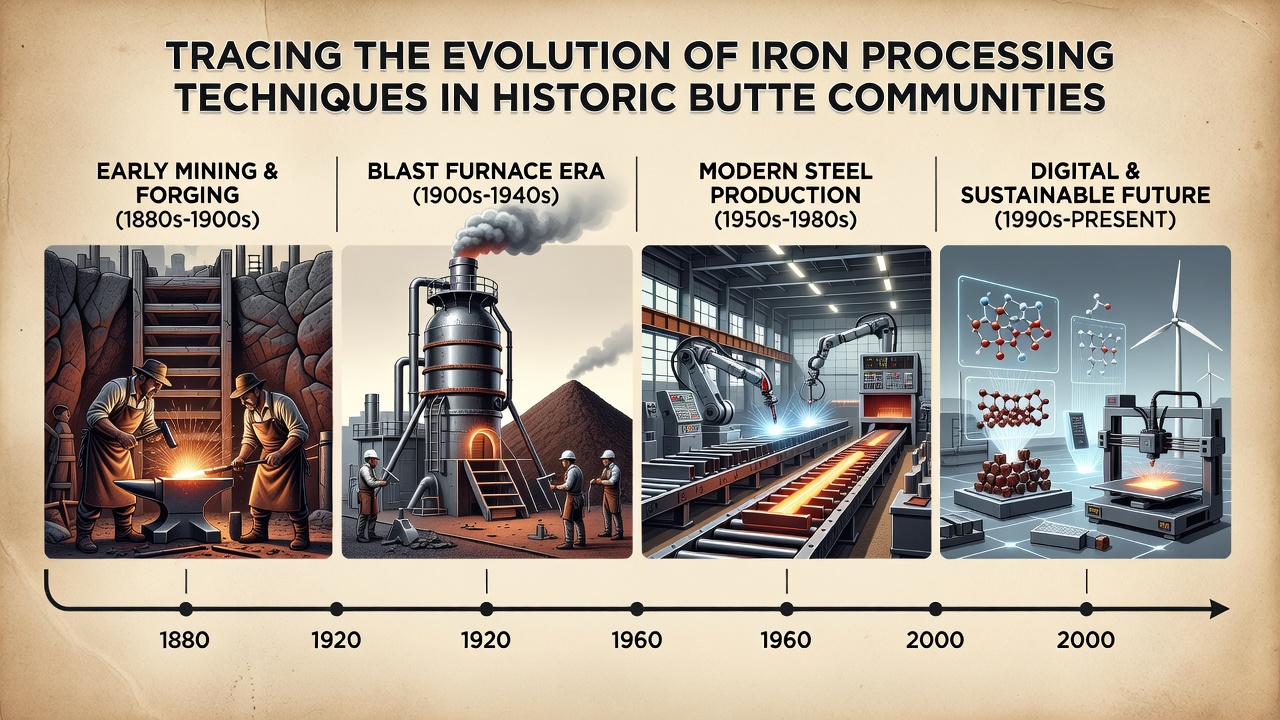
Butte communities in Montana developed iron processing methods that supported the region's extensive mining operations from the mid-1800s onward, and these techniques evolved through distinct phases driven by resource availability and industrial demands. Early settlers relied on basic blacksmith forges to produce tools and hardware from local iron ores, while later advancements incorporated larger-scale smelting facilities that processed ore into usable metals for railroads and machinery.
Initial Processing Methods in the 19th Century
Records from the 1860s show that blacksmiths in Butte used charcoal-fired forges to heat and shape wrought iron, and these setups drew on nearby timber stands for fuel while drawing water from local streams to cool the metal. Workers hammered iron bars into picks, drills, and wagon parts essential for silver and copper extraction, yet the process remained labor-intensive with output limited to small quantities per day. Historical accounts indicate that communities often sourced pig iron from distant suppliers before local deposits gained attention, and this reliance shifted as prospectors identified hematite veins in surrounding hills.
By the 1870s, small bloomery furnaces appeared in outlying areas, where operators layered iron ore with charcoal and limestone to create workable blooms through repeated heating and hammering cycles. These furnaces operated at temperatures around 1,200 degrees Celsius, and crews refined the output into bars suitable for further fabrication in town workshops. Data from mining ledgers reveal that production volumes increased steadily as demand grew from expanding rail lines connecting Butte to eastern markets.
Industrial Expansion and Technological Shifts
Steel production entered Butte operations during the 1880s when companies installed Bessemer converters that blew air through molten iron to reduce carbon content, and this method allowed faster conversion of pig iron into steel rails and structural components. Engineers adapted converter designs to handle variable ore qualities found in the district, while water-powered bellows gave way to steam engines that maintained consistent airflow. Observers note that output from these facilities supported both local mining equipment and shipments to other western territories.
Additional upgrades in the early 1900s included open-hearth furnaces that processed larger batches of scrap and ore mixtures, and these units reached capacities exceeding 50 tons per heat according to company reports. Workers monitored temperature and slag composition closely to achieve desired steel properties, and the resulting materials found use in headframes, pumps, and processing mills across the Butte hill. Researchers have documented how fuel transitions from charcoal to coke improved efficiency, since coke burned hotter and produced fewer impurities in the final metal.
Twentieth-Century Adaptations and Resource Management
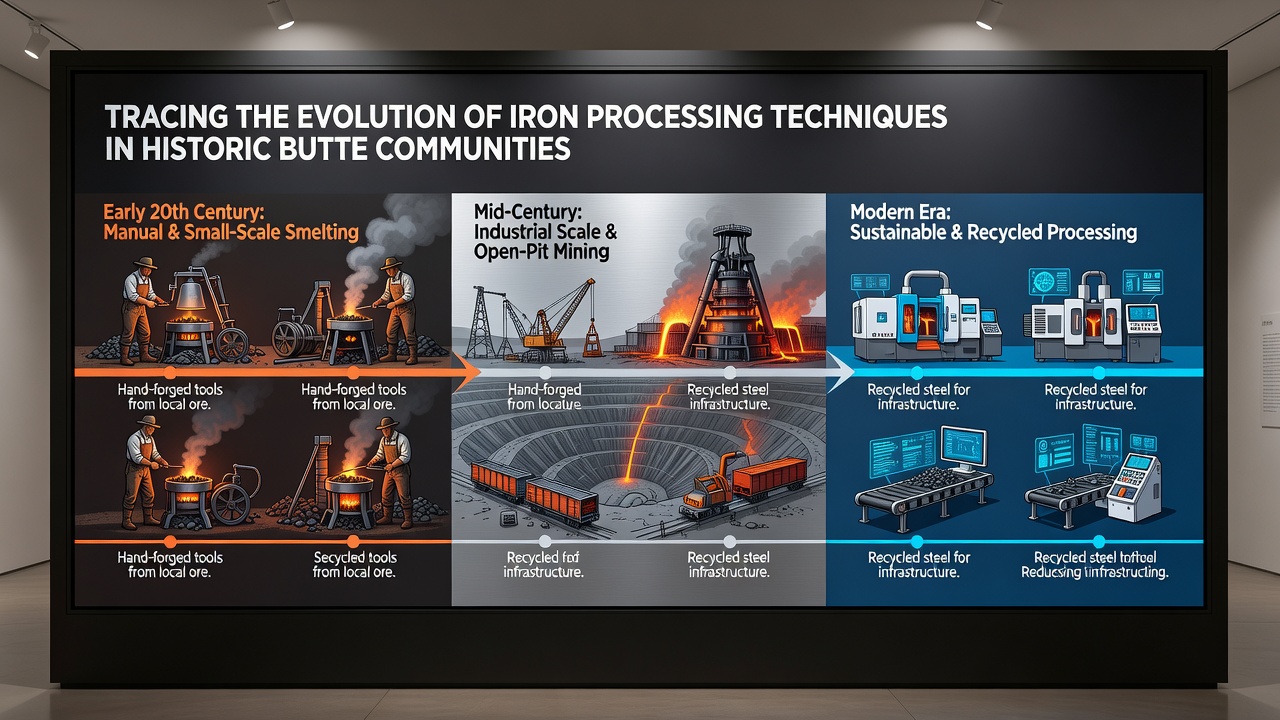
During the 1920s and 1930s, electric arc furnaces supplemented traditional methods in some Butte plants, and these systems melted scrap iron using electrical resistance to generate precise heat control. Operators integrated these units with existing open-hearth lines to recycle materials from decommissioned equipment, and production data shows reduced reliance on virgin ore as recycling rates climbed. Communities adjusted techniques further when wartime needs during the 1940s accelerated output of specialty steels for military applications.
Postwar years brought environmental considerations into processing practices, with facilities adding basic dust collection systems to capture particulates from furnace exhausts. Government surveys from that era tracked emissions levels and ore consumption rates, and these records indicate gradual adoption of cleaner burning practices while maintaining output targets. Local operators experimented with alloy additions such as manganese to enhance steel durability for heavy-duty mining tools, and such modifications extended equipment life in abrasive underground conditions.
Preservation Efforts and Modern Context
By the late 20th century, many iron processing sites in Butte transitioned toward heritage preservation, and organizations cataloged surviving equipment including blast furnace remnants and forging tools for educational displays. Academic studies from regional universities have examined slag heaps and foundation ruins to reconstruct operational sequences, and findings confirm the progression from bloomery to converter-based methods across decades. Public archives continue to digitize ledgers and photographs that detail workforce sizes and material flows through the historic period.
Events scheduled for September 2026 include community-led tours of preserved industrial sites, where participants examine original furnace structures and review primary documents on technique changes. These gatherings draw on research compiled by historical societies, and they highlight connections between Butte's iron output and broader western expansion patterns.
Conclusion
Evidence from mining records, engineering reports, and archaeological surveys demonstrates that iron processing in historic Butte communities progressed from small-scale forges to integrated industrial systems over roughly a century. Each phase built upon prior knowledge of ore reduction and metal refinement, and adaptations responded directly to the demands of copper and silver extraction industries. Continued documentation efforts ensure that details of these methods remain accessible for future analysis.